


































PLANET PRESERVATION
Planet Preservation
We commit to the efficient use, reuse, and restoring of agriculture and fisheries resources, as well as better management of our environmental impacts by decreasing our water and energy consumption, lessening our greenhouse gas emissions, and actively monitoring our waste generation as we continue to grow our business and serve Filipinos.
Tuna Sustainability
Leading the advocacy for more sustainable fishing practices and responsible sourcing as well as improving how we manage our impacts as part of the solution
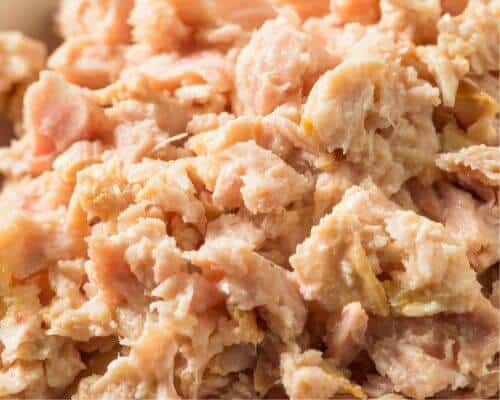
Using Skipjack Tuna
Stocks of skipjack are deemed to be at healthy levels by the International Seafood Sustainability Foundation (ISSF) in 2023.
Traceability
All tuna raw materials are traceable at the source – vessels are registered at the Proactive Vessel Register and audited by a third-party assurance group, MRAG Americas. This ensures that we only source from suppliers who comply with industry best-practices and conservation measures.
International Seafood Sustainability Foundation (ISSF)
CNPF is a member of the International Seafood Sustainability Foundation (ISSF). CNPF also sits on the Board of the ISSF to help shape sustainable tuna fishing practices globally.
Aligning with Other Global Standards and Industry Associations
We are also a member of the Global Tuna Alliance—a market-led initiative that issued the Tuna Traceability Declaration in 2020 in support of the U.N. Sustainable Development Goal 14: Life Below Water.
In 2021, General Tuna adopted the GDST Standards and Guidelines for Interoperable Seafood Traceability Systems, Version 1.0 as part of the global initiative to make global seafood traceability more reliable and more affordable by allowing for interoperability across seafood traceability platforms. This is an important development for the industry to combat illegal fishing and unethical labor practices.
42% of our fisheries are certified by Marine Stewardship Council (MSC). To further our MSC Certification, we are working with the Bureau of Fisheries and Aquatic Resources (BFAR) to manage a Fishery in Progress (FIP) in the Western Central Pacific Ocean High Seas Pocket 1 for 36 Philippines-registered vessels. This FIP addresses a common set of harvest rules and enforcement tools and capabilities to ensure sustainable stocks of Yellowfin and Skipjack tuna. Importantly, the FIP contributes to nation-building as it encompasses all Philippines-registered vessels, thereby helping to make our local fishing industry more competitive on international markets.
To read more about Tuna Conservation, visit the Purchases Assessment page on our website.
Natural Resource Efficiency
Water Consumption Reduction
Continuously improving by invest in technology and deepening our understanding of our water-related impacts on the local communities where we source our water

a. Water use increase in 2025 is due to the addition of a new coconut facility in Tangub.
b. Water intensity is calculated as total water withdrawal divided by total product volume produced in MT. This metric means that for every MT of product manufactured in 2025, CNPF withdrew 10.04 cubic meters of water.
CNPF ensures the highest water quality standards across all our business units by utilizing a mix of sustainably sourced (deep well water and purified district) water. Our rigorous monitoring, sampling, and testing protocols across production processes strictly adhere to quality standards, reflecting our commitment to operational excellence and environmental stewardship.
In our Tuna, Coconut, and Sardines plants, we reclaim condensate, turning what would be waste into a resource. For instance, the water from softener backwash finds new life in washing processes, and we employ water recycling in our vacuum filling machines. In our Meat business, we’re making significant strides in water conservation by reusing cooling water from previous cycles. We use reverse osmosis systems across our business units to reuse water wherever feasible.
In 2025, total water withdrawal increased by 9%, resulting in a 0.05CBM/mt increase in water intensity. This was due to the addition of CPAVI Tangub to the reporting scope. CNPF continues to pursue various initiatives to reduce our water demand, utilize alternative water sources, and recycle water as much as practicable.
Water intensity is calculated as total water withdrawal divided by total product volume produced in mt. This metric means that for every mt of product manufactured in 2024, CNPF withdrew 9.99 cubic meters of water.
Energy Consumption Reduction
Implementing energy conservation across all plants resulting in an improvement in our energy intensity of 3% versus the year before.
Our Tuna plant has 100% energy-efficient LED lighting, and we have additionally replaced other systems, equipment, and machinery with more energy-efficient technology. Our Sardines plant has upgraded their motors to high-efficiency models that support both their cannery and fishmeal operations. We are also diversifying our energy mix to increase the share of renewable energy such as solar power.

Energy consumption is measured using installed meters for purchased renewable and non-renewable electricity, while fuel consumption is compiled using delivery receipts, storage tank level readings, equipment operating logs, and the estimated liter consumption of trips.
- Restated 2024 data for accuracy.
- Increase in 2025 is due to new coconut plants using biomass for power, the shift of Tuna and Coconut facilities to geothermal energy, expanded scope and better data collection using actual billing.
- Energy intensity is calculated as total energy consumption divided by total product volume produced in MT. This metric means that for every MT of CNPF product manufactured in 2025, CNPF consumed 6.23 GJ of energy. 6.23d 3.4 2.5 31% 69% 2024a 38%b 62% 2025 Sustainability 108 gHigher energy intensity is due to the addition of a new coconut plant, which is still ramping up production.
In 2025, total energy consumption increased by 25%. This was primarily driven by the restatement of CPAVI’s 2024 coal consumption and biomass energy computation, as well as improved data collection for the tuna business using actual utility billing and an expanded reporting scope. Additionally, the inclusion of CPAVI Tangub in the reporting boundary further contributed to the increase in consolidated energy consumption.
Energy intensity is calculated as total energy consumption divided by total product volume produced in mt. This metric means that for every mt of CNPF product manufactured in 2024, CNPF consumed 5.02 gigajoules of energy.
Environmental Impact Management
Greenhouse Gas Emission Reduction
Increasing the share of renewable energy in our energy mix and implementing new waste-to-energy initiatives.
During the year, the Company expanded its solar power facility in General Santos City, where it houses its largest manufacturing hub in the country for tuna and coconut. From a capacity of 5.2Mw, the operational solar capacity now stands at 8.6MW, representing a 65% increase.

- Restated Scope 1 emissions and related metrics for accuracy.
- Increase in 2025 Scope 1 emissions is driven by higher diesel use for generator sets.
- Emission intensity is calculated as Scope 1 GHG emissions divided by total product volume produced in MT. This metric means that for every MT of product manufactured in 2025, CNPF emitted 0.38 tonnes of carbon dioxide equivalent in greenhouse gases (direct emissions).
CNPF’s tuna and coconut facilities predominantly use clean energy sourced from a hydroelectric power plant through the grid. In 2021, the Company commissioned its first solar PV plant in a move to double down on its commitment to more sustainable manufacturing practices.
Spotlight Story
Saving Our Seas 2025
In 2025, CNPF once again expanded our flagship environmental campaign, “Saving Our Seas,” transforming it from a one‑day cleanup into a nationwide movement that blends marine conservation with community empowerment and policy support. By integrating high‑profile activations, mobilizing volunteers, and engaging with local governments and communities, our campaign helped demonstrate that tackling plastic pollution and promoting a circular economy requires shared responsibility and cross-sectoral collaboration among consumers, businesses, and government alike.
“Plastic with Park Seo‑joon”: Turning Awareness into Action
A major catalyst for the 2025 Saving Our Seas campaign was the July 2025 fan meet event featuring South Korean actor Park Seo‑joon, who was appointed as a brand ambassador for CNPF’s Century Tuna brand. At this high‑profile gathering, fans were invited to donate plastic bottles as part of a collective effort to support the campaign, a symbolic moment that sparked momentum and helped elevate public involvement in the initiative.
Over 8,000 fans attended the event, which resulted in 25 kg in plastic collections during the half-day period—67% more than our initial target. The event helped amplify the campaign’s reach and broaden participation. By the end of the campaign, CNPF was able to collect an estimated 1 MT of plastics.
International Coastal Cleanup Day 2025: A Nationwide Surge of Volunteerism
For its third year, the Saving Our Seas campaign marked International Coastal Cleanup Day 2025, expanding the cleanup drives from just one site in 2024 to six coastal locations nationwide. More than 8,200 volunteers participated—a 228% increase in volunteers compared to the roughly 200 participants just a year earlier.
Together, these volunteers collected approximately 1,386 kg of plastic waste, nearly quadrupling the amount collected in 2024. These activities not only helped remove trash from beaches and waterways but also drew attention to the scale of marine debris and the importance of collective action.
La Union Hospitality Group Ordinance Orientation: Single‑Use Plastics Ban Advocacy
Finally, CNPF’s environmental advocacy linked closely with local policy efforts such as the Single‑Use Plastics (SUP) ban initiative in provinces like La Union, where local ordinances impose restrictions on items like plastic utensils, straws, cups, and polystyrene products to curb pollution.
Through Saving Our Seas, CNPF partnered with La Union’s DENR to educate the various hospitality groups about solid waste management. We also worked with the Provincial Government Environment and Natural Resources Office (PG-ENRO) about prohibition of single-use plastics in the province (Provincial Ordinance No. 426-2023), with 49 groups in total taking part in these sessions.
Landfill Waste Reduction
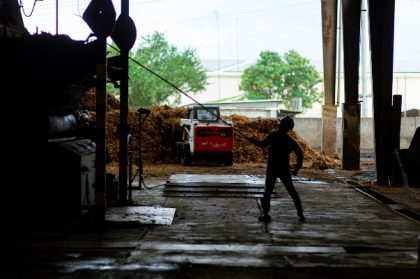
In our Coconut business, we strive to incorporate as much of the fruit as possible in a wide range of products such as Coco Mama (cream and meat) and OEM products like coconut water, coconut oil, desiccated coconut, and coconut flour, among others. To minimize waste, we are exploring sustainable uses for coconut shells and husks, for example as a biofuel. In our Tuna business, excess fish parts are turned into byproducts such as fish meal, fish oil, and fish soluble.
In compliance with the Ecological Solid Waste Management Act, all business units conduct onsite segregation of their operational waste as part of daily operations. We sell recyclables from our operations such as scrap metals, plastics, paper, and cardboard to scrap recyclers, while accredited haulers collect our general rubbish for disposal at landfill. All our business units have systems in place to monitor and measure the amount and type of waste from their operations and report quarterly to our Sustainability Steering Planet Subcommittee.
We prioritize materials that are recyclable, renewable, or biodegradable. Our current packaging range—from tin cans and metal lids to glass bottles, plastic containers, paper labels, and cardboard cartons—is designed to support recyclability. Additionally, we actively collaborate with partners to maximize the recycling and co-processing of plastic packaging, in an effort to reduce our environmental footprint. For further information see this report’s section on Net Zero Plastic Waste.


We are committed to managing the waste we generate, to recover and process these into resources that can be reused whether for our operations or for external processes.
*CNPF improved waste data collection, increasing the scope of business units and waste types tracked, resulting in an increase in the total waste generated reported for the year. The was primarily driven by reporting more general landfilled waste, packaging waste, and food waste from our operations that are processed into fishmeal and other by-products.
Plastic Waste Footprint Reduction
We continuously seek out viable eco-friendly substitutes to single-use plastics and explore ways to diminish our plastic dependency. Our Tuna business has replaced plastic stretch films with reusable wraps for palletized empty cans and finished goods in logistics and transport, reducing plastic waste by over 56% since implementation of these initiatives in 2022.
70-80%
of our brands use paper and tin packaging which are more easily recycled
2025 marks our sixth year of committing to reducing our brands’ plastic footprint by 100% through an offsetting mechanism, ahead of the 40% footprint reduction required by the Extended Producer Responsibility Act of 2022.
We’ve continued our commitment, with 14 brands still operating under the PCX Plastic Cleanup Program, encompassing all CNPF brands using flexible plastic packaging. We are committed to incorporating all new CNPF brands that use flexible packaging into our plastic waste management program. To offset our footprint in 2025, we purchased 4,184 MT worth of plastic credits.in 2024, we purchased 2,904 mt worth of plastic credits.
Net Zero Plastic Waste Brand Certifications
We are pleased to share that all our brands that make use of flexible plastic packaging have been certified as Net Zero Plastic Waste Brands by Isla Lipana & Co. (PriceWaterhouseCoopers).
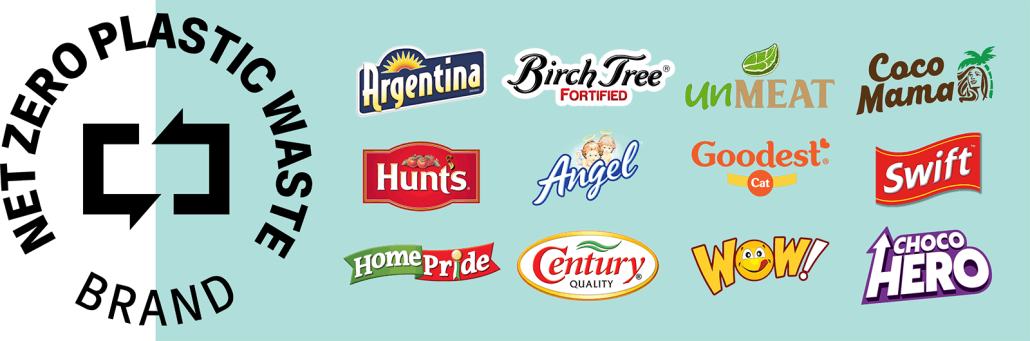
The certified brands were the only CNPF brands that use post-consumer flexible plastic packaging during the audited period, making up 20-30% of our branded business.
See certifications here – Net Zero Plastic Waste Certifications
Learn more about our plastic waste footprint reduction program here.
Spotlight Story
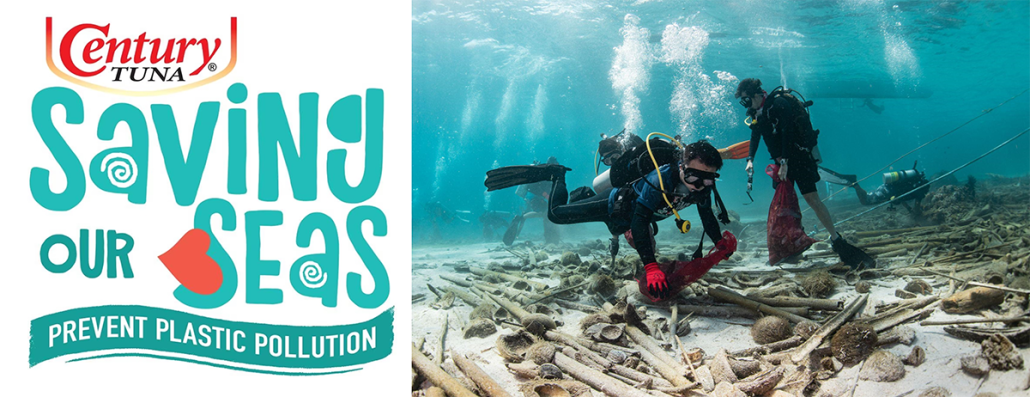
Saving Our Seas
CNPF reinforced its commitment to the environment this year with the expansion of its “Saving Our Seas” campaign, in partnership with the impact organization HOPE and through its Aling Tindera Waste-to-Cash program. While this is but a small step towards addressing the plastic waste problem in the Philippines, we are steadfast in our belief that promoting the circular economy and mobilizing communities are fundamental to make progress.
The campaign, launched in 2023 in conjunction with Earth Hour, kicked off with volunteer effort supported by 212 individuals who collected plastic waste in Mabini, Batangas, a hotspot for biodiversity. To ensure the sustainability of these efforts, CNPF has installed multiple plastic waste collection points along the coast. These serve not only as disposal sites but also as economic opportunities for the community. The sari-sari store owners, who are part of HOPE’s Aling Tindera Waste-to-Cash program, play a pivotal role in managing these points. They collect, accumulate, and ensure proper recycling or upcycling of the waste.
At the close of 2023, the Aling Tindera, in coordination with Saving Our Seas, had successfully collected over 9,000 kilograms of plastic waste in total.
The overarching aim of CNPF is to empower Filipino communities to fight against plastic pollution, emphasizing that the responsibility for preventing pollution begins at home, regardless of one’s proximity to the coastline.
Our Activities as a Plastic Cleanup Partner of PCX
CNPF’s waste-to-cash program, developed in collaboration with PCX, empowers women-owned sari-sari stores in Manila to serve as collection hubs for post-consumer plastic, providing residents with a new income source while promoting sustainability.
We have two collection points stationed in Barangays 432 and Baseco Port, and 14 located in Anilao, Batangas. They are managed by women micro-entrepreneurs, incentivizing community-wide collection efforts. This initiative enhances the livelihoods of residents and store owners, increasing the average annual income of Aling Tindera participants (AT’s) by an average of 48% nationwide, and plays a crucial role in our efforts to better manage post-consumer plastic waste.
Another key inclusion in our Plastic Waste Reduction initiatives is “Century Tuna Saving Our Seas” collaboration with HOPE, the Philippines’ first certified B Corp,. This initiative goes beyond collecting plastic for reuse and recycling and emphasizes community involvement into plastic waste reduction and management efforts.
Some highlights of our 2024 activities include:
- April 2024: PALIT PLASTIC PROJECT in La Union with 16 out 20 LGUS participating
- September 2024: INTERNATIONAL CLEAN-UP DAY in Brgy. Mainit, Mabini, Batangas
- September-October 2024: SCHOOL PLASTIC DRIVE (Talaga Elementary School, Mainaga-San Francisco School, Mabini Central School) in Mabini, Batangas
Overall, the Saving Our Seas collaboration marked a record high of almost 60,000 kgs of plastic waste diverted in 2024, four times the 15,000 kgs recorded in 2023.
Supply Chain Management
Supplier Credibility
Seeking business partners that meet our commercial standards, comply with relevant government regulations, and align with our social and environmental aspirations as a responsible member of the community.
Instituted the Supplier Code of Conduct and Ethics (SCOCE) that outlines the company’s stance with respect to responsible sourcing and supply chain sustainability
100% of current active suppliers signed and acknowledged the SCOCE as a requirement to work with CNPF
Local Sourcing
To support the local economy, we allocate over 56% of our total procurement budget on suppliers registered in the Philippines. In 2024, 100% of the raw materials for our Coconut business were sourced from local farms. Through our Agripreneur programs, we source approximately 80% of the fresh produce we use in Tuna from local farmers. Our Sardine business also works with local fisherfolk, sourcing most of its major raw materials requirements locally.
Responsible Sourcing